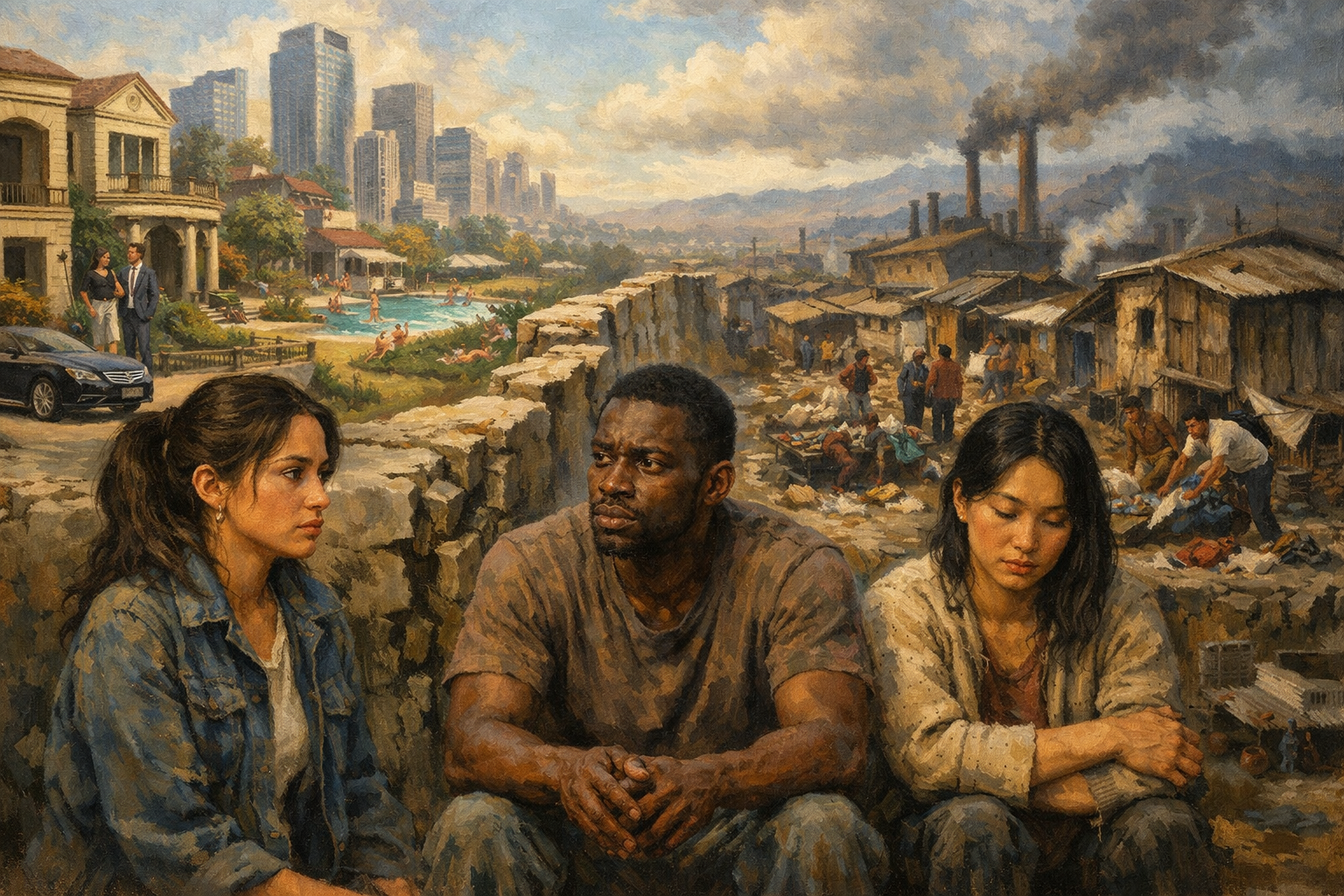
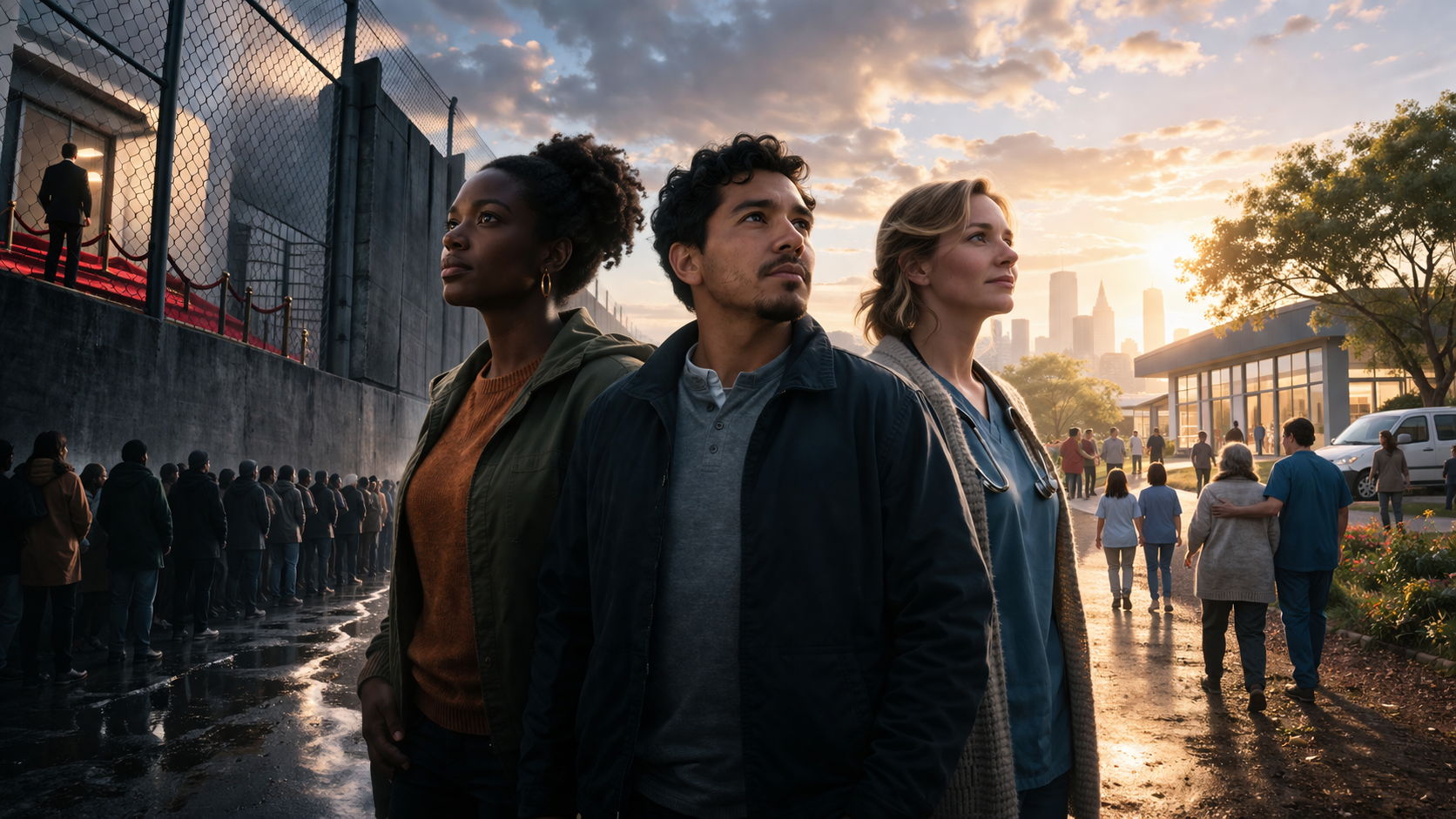
On one side of town, manicured lawns frame houses that look like they’ve been lifted from glossy magazines. Driveways gleam with SUVs and hybrids, and parents talk casually about college tours or ski trips. On the other side, just a few miles away, apartment windows are covered with plastic to keep out the winter cold. The corner store sells groceries at higher prices than the supermarket across town, and parents there talk about stretching paychecks to cover rent and food. Same city, different planets.
Economic inequality is not new, but the scale of today’s wealth gap feels different. A handful of billionaires hold more wealth than billions of people combined. The gap is not just about numbers in a bank account. It is about access: to healthcare, education, safe housing, and the freedom to plan a future rather than just survive the present. The American dream promised mobility, but for many, the ladder has missing rungs.
The conversation about inequality is more than academic. It plays out in the lives of families deciding between medicine and groceries, or workers juggling three jobs while executives collect bonuses worth millions. It raises questions that should unsettle anyone paying attention: Is the system fair? Who benefits most? And if opportunity really is the ticket to success, why are so many locked out of the theater before the show even begins?
The Wealth Gap in Daily Life
Think about what money actually changes in daily routines. A wealthy parent can pay for tutoring when their child struggles in math. A low-income parent may not have internet at home, leaving their child behind in an online class. One family calls a plumber when a pipe bursts. Another family tries to fix it themselves, hoping it does not flood the floor because the repair bill would wipe out the month’s budget. These are not extreme examples. They are Tuesday.
Economic inequality shows up in these quiet, grinding differences. It is not always about luxury versus poverty. Sometimes it is simply about security versus constant vulnerability. Wealth cushions mistakes and absorbs emergencies. It allows families to recover from illness, job loss, or a natural disaster without spiraling into debt. Without that cushion, one bad break can sink a family for years and set back the generation that follows. The statistics confirm what stories already show: the top one percent of Americans hold more wealth than the bottom ninety percent combined, and the gap has been widening for decades.
Minimum Wage and the Cost of Essential Work
Consider Maria, a home health aide working twelve-hour shifts caring for elderly patients. Her work is essential, physically demanding, and emotionally draining every single day. Yet her paycheck barely covers rent and food. When her car breaks down, she has to choose between fixing it or paying for her son’s school supplies. Meanwhile, her employer, part of a large healthcare corporation, reports record profits. Her sacrifice built those profits, and she will not see a dollar of them.
This is the human face of wage inequality. The federal minimum wage in the U.S. has been stuck at $7.25 an hour since 2009. Try paying for rent, groceries, and healthcare on that, and the math falls apart fast. Even in states that have raised the minimum, wages often lag behind the actual cost of living. Labor rights are supposed to protect workers like Maria, but the balance of power tilts heavily toward employers. Union membership has declined steadily, leaving workers with less bargaining power than at any point in recent memory. Gig economy jobs promise flexibility but often deliver instability, with no benefits, no protections, and no guarantee of income from one week to the next. The question becomes less about how hard someone works and more about why the system refuses to value that work honestly.
Tax Justice and Who Pays What
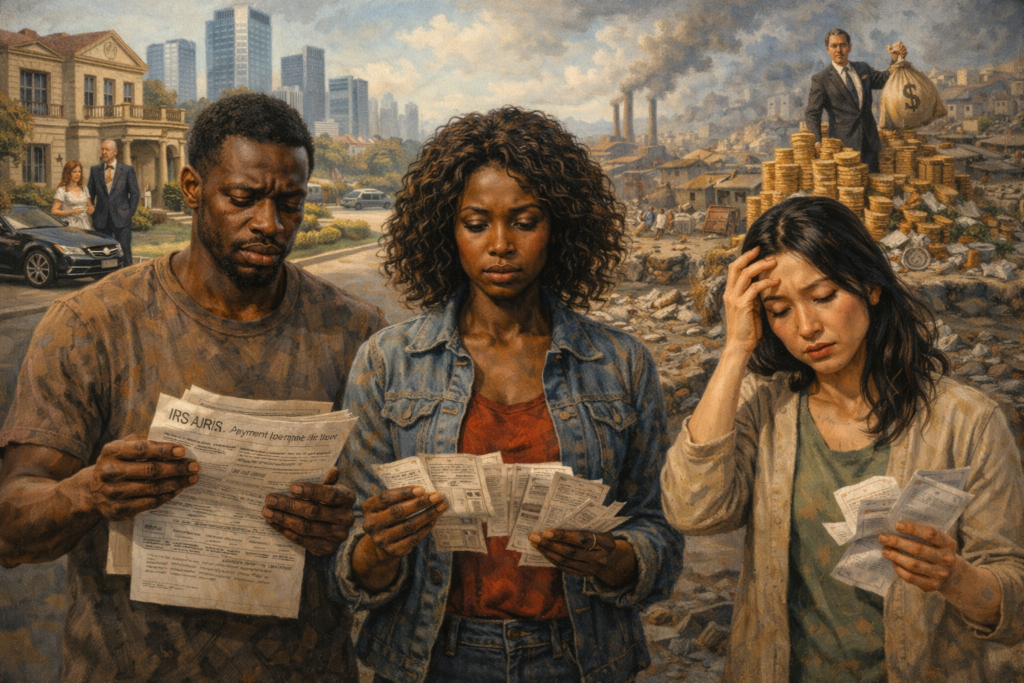
Taxes are supposed to be the great equalizer. But dig into the numbers, and you will find another layer of inequality running underneath. Large corporations and billionaires often pay less, proportionally, than teachers or nurses do. Through loopholes, offshore accounts, and sophisticated accounting, the wealthy trim their tax bills significantly while middle-class families see chunks of every paycheck withheld without any flexibility. In 2019, some of the wealthiest individuals in the world paid effective tax rates lower than working-class Americans. That single fact undercuts the entire idea of shared fairness.
Tax justice is not about punishing success. It is about ensuring that the benefits of shared infrastructure, the roads, the public schools, the emergency systems, are supported honestly by everyone. When the richest consistently sidestep their share, the gap widens not just in bank accounts but in public trust. People begin to feel the system is rigged. And when trust collapses, cynicism fills the space that hope used to occupy. That cynicism has consequences for democracy, for civic life, and for the willingness of ordinary people to keep investing in a system that seems to favor only a few.
Basic Income and the Boldest New Idea
Out of frustration with the old system, new ideas have started to move from theory into practice. One of the boldest is basic income: a guaranteed monthly payment to every person, with no strings attached. Supporters argue it provides the stability that precarious work never can. During the pandemic, stimulus checks gave millions of Americans a brief glimpse of what that floor might look like in practice. For many, it meant rent covered, food on the table, and a small window of breathing room they had not felt in years.
Experiments in cities like Stockton, California tested monthly basic income payments and tracked what happened. Participants reported not only better financial stability but improved mental health and, notably, higher employment rates. When the crushing pressure of constant survival lifted even slightly, people could take chances they could not afford to take before, pursuing education, starting small businesses, or simply recovering from exhaustion. Critics worry about cost or assume people will stop working, but the evidence points in the opposite direction. Basic income may not be a cure-all, but it forces a deeper question: if the economy is supposed to serve people, why isn’t survival guaranteed?
Bridging the Divide
The wealth gap is not just a chart in an economics textbook. It is the difference between a family planning for college and a family praying the car does not break down this week. It is Maria working twelve hours and still living paycheck to paycheck while her employer builds record profits. It is billionaires who find ways around taxes while teachers buy classroom supplies out of their own pockets. Naming those realities clearly is not divisive. It is honest.
Closing the divide requires more than tinkering at the edges. It requires rethinking what fairness actually looks like in a society that prides itself on opportunity. Raising the minimum wage, strengthening labor rights, ensuring tax fairness, and seriously exploring ideas like basic income are not radical demands. They are attempts to repair a system where wealth determines whose futures are treated as worth protecting. The divide may feel vast, but it is not permanent. It was built by choices, and it can be narrowed by better ones. No society can call itself just while half its people climb a ladder with missing rungs and call it a fair race.