

Where We Left Off
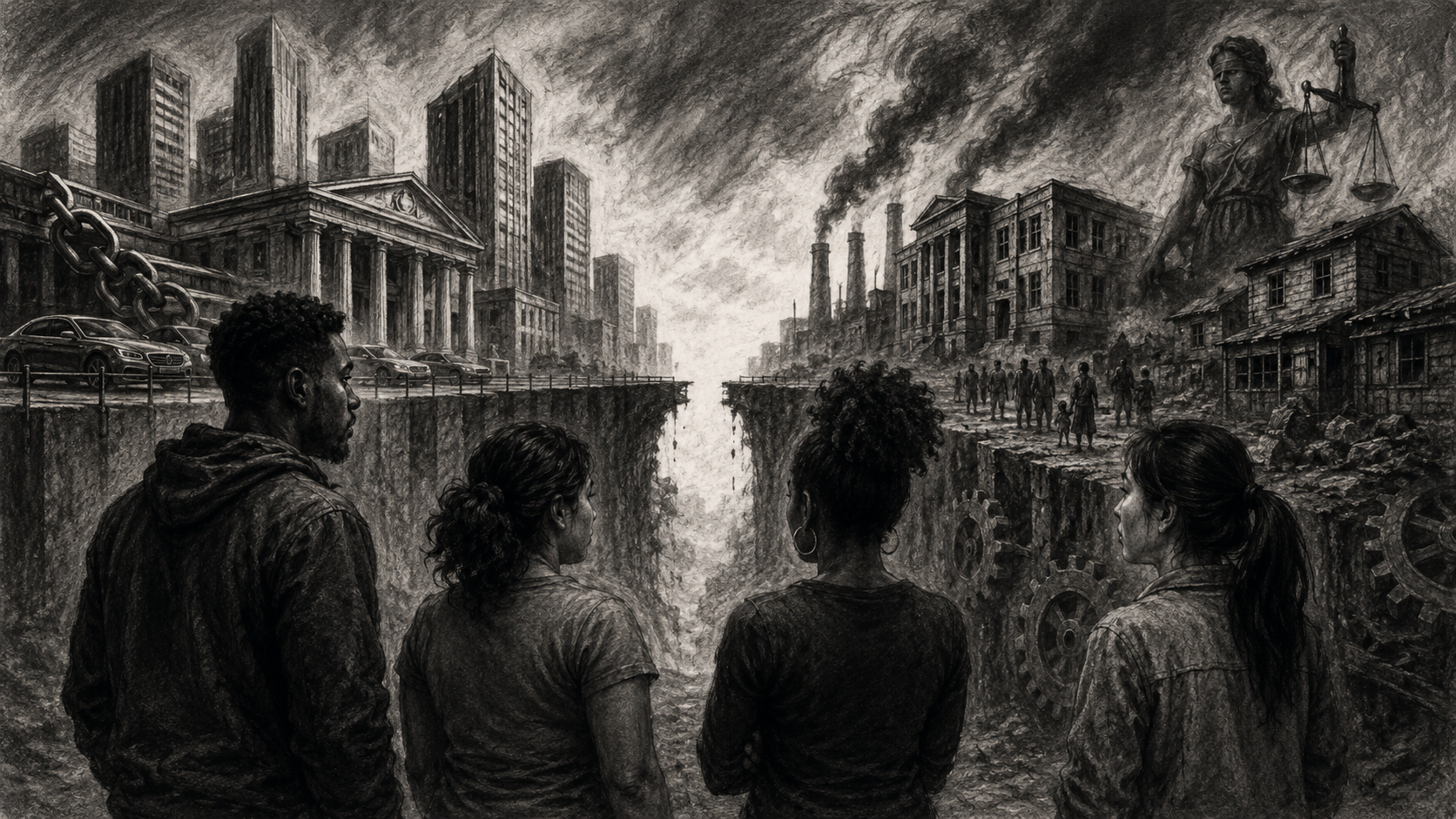
Part 1 put you on both sides of that city. One kid walked into a school with smartboards and fresh paint. Another walked into a school with peeling walls and books held together with tape. One set of parents planned vacations and retirement. The other set worked two jobs and hoped the rent check cleared before the power got shut off. Same city, different worlds, and the question that closed that post is still sitting there unanswered. Can hard work really move someone up the ladder when the rungs are missing?
Here is the answer nobody wants to give you straight. The rungs are not missing by accident. They were removed, and in some cases they were never built to begin with. This is not a story about bad luck or bad choices. It is a story about design. Somebody drew these lines a long time ago, and a lot of people have spent a lot of money making sure the lines stay right where they are.
The Zip Code That Was Never an Accident
Start with where those two kids live, because that is not random either. For most of the twentieth century, banks and government agencies drew literal maps marking which neighborhoods were safe to invest in and which ones were not. The neighborhoods marked as risky were almost always Black neighborhoods, and the practice had a name: redlining. Homeowners in the green zones got loans, built equity, and passed that equity down to their kids. Homeowners in the red zones got denied, and the wealth gap that opened up between those two groups never closed. It compounded, generation after generation, the same way interest compounds in a savings account, except this account was working against people instead of for them.
Redlining as an official government policy ended decades ago. The map it drew did not disappear with the policy. Property values, school funding tied to property taxes, and access to credit all still trace back to those old lines. The kid in the well funded school is not benefiting from luck. He is benefiting from a map drawn before his parents were born. The kid in the underfunded school is not failing because he does not try hard enough. He is standing on ground that was marked as expendable before he ever took his first step.

The Paycheck That Never Agreed to This Fight
Zoning and lending are one layer. Wages are another, and this one hits almost everybody carrying real weight right now, regardless of zip code. Worker productivity in this country has climbed for decades. Corporate profits have climbed right along with it. Wages, adjusted for what things actually cost, have barely moved. That gap between what workers produce and what workers get paid did not open itself. It opened because the rules got rewritten, one policy fight at a time, in favor of the people who already had leverage.
Union membership dropped. Overtime protections got weakened. Full time jobs got restructured into contract work and gig labor, which sounds flexible until you notice nobody is paying into your retirement or covering your medical bills anymore. None of this happened because workers stopped caring about their jobs. It happened because somebody decided the cost of labor was a problem to be solved, and the solution they landed on was making sure fewer dollars reached the people doing the actual work.
Financial Literacy Will Not Fix a Rigged Scoreboard
Here is where people usually get told the answer is personal responsibility. Save more. Budget better. Learn about compound interest. All of that is fine advice, and none of it addresses the actual problem. You cannot save your way out of a system where housing costs eat half your paycheck before you buy groceries. You cannot budget your way around a credit score that was shaped by redlining you had no part in creating. Financial literacy assumes the game is fair and you just need better strategy. The real issue is that parts of the scoreboard were rigged before you walked onto the field.
This matters because blaming yourself for a structural problem does something worse than fail to fix it. It teaches you to stop asking why the structure exists at all. That is exactly the outcome the people benefiting from the structure are counting on.
Who Actually Writes the Rules
Every one of these systems, the lending maps, the wage suppression, the tax code that treats investment income more gently than a paycheck, got written by somebody. Tax policy does not fall from the sky. It gets written by legislators, and those legislators get funded by the same corporations and wealthy individuals who benefit most from how the code reads. This is not a conspiracy theory. It is public record. Follow the campaign contributions and you will find the fingerprints on the legislation.
None of this means the system cannot be pushed on. It means the pushing has to be aimed at the actual mechanism instead of at yourself. Zoning boards hold public meetings. Tax policy gets voted on. Wage laws get set at the state and local level as often as they get set in Washington. These are not immovable facts of nature. They are decisions, made by people, and decisions made by people can be challenged by people.

The Part You Get to Write
Part 1 asked whether hard work can move you up a ladder with missing rungs. The honest answer is that hard work matters, but it was never supposed to be the whole plan. The other half of the plan is understanding exactly which rungs are missing and why, so you stop carrying the weight of a problem you did not create and start putting your energy where it can actually move something.
You are not failing a fair test. You are navigating a system that was built to favor people who look nothing like you and started with resources you were never given. That is not an excuse to stop building. It is the reason your building matters as much as it does. Every person who understands these systems and keeps pushing anyway is proof the design does not get the final word.
The wait for someone else to fix this is over, because it was never coming on its own timeline. You are not on the other side of this mountain explaining it from a place of comfort. You are in it, same as your reader, still choosing to build something real on ground that was never leveled for you. That is the whole point of naming the systems instead of just describing the divide. Once you can see the map, you can start deciding what you are going to do about it.
Ronnie Canty | The Canty Effect