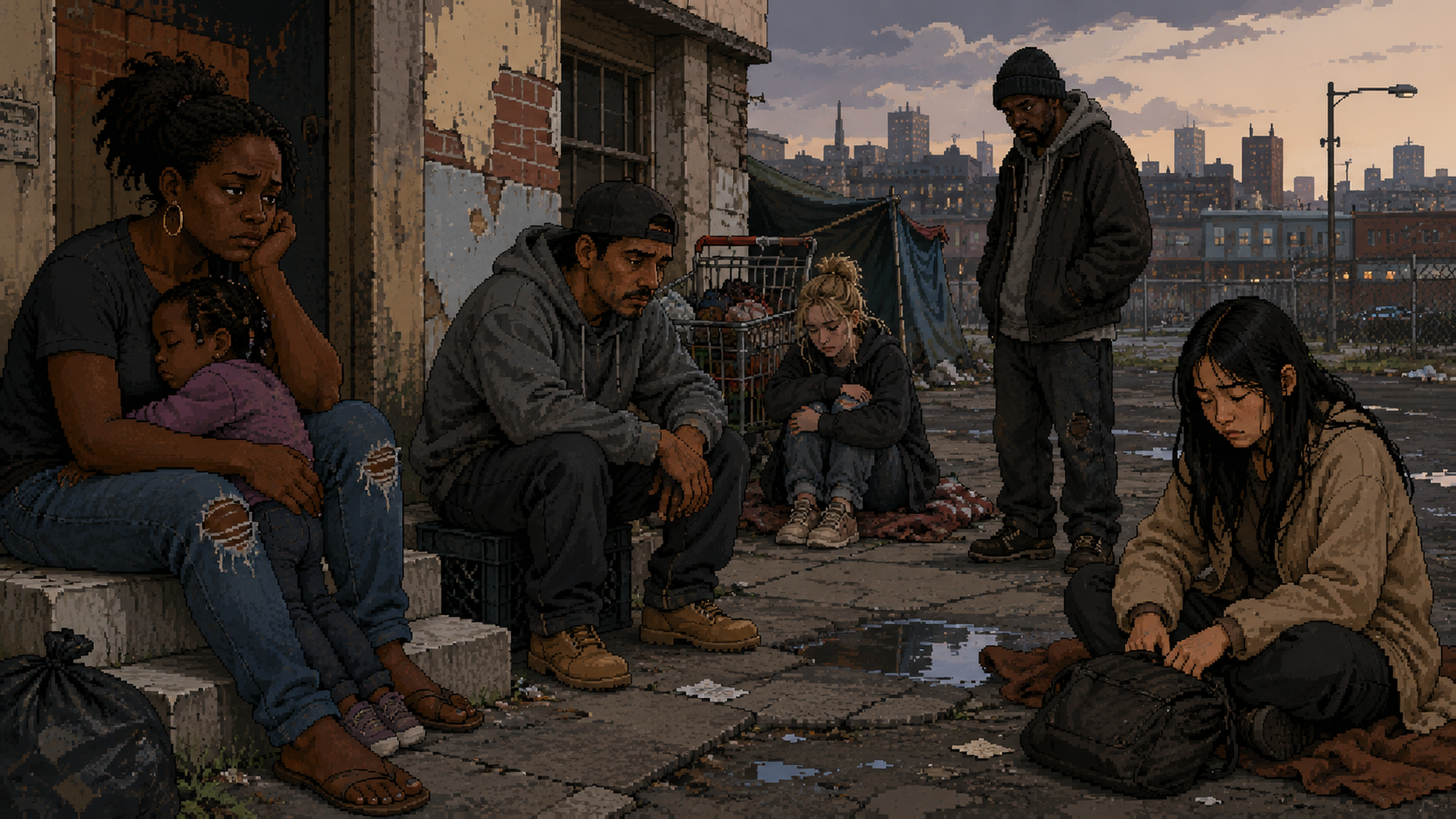
Poverty has a look, and most of us learned it from a commercial. A tired mother staring out a window. A child with a torn coat standing in the rain. Sad music playing underneath it all so we know exactly how to feel before we know a single real fact. That image was built to make you reach for your wallet for thirty seconds and then move on with your day. It was never built to make you actually see anyone.
I have lived close enough to real poverty to know the commercial version is a costume. It is not wrong because it shows pain. It is wrong because it shows pain that ends the moment the ad does. Real poverty does not end. It shows up again the next morning, wearing regular clothes, going to a regular job, saying good morning to people who have no idea what it took just to get out the door.
What Poverty Looks Like on Paper
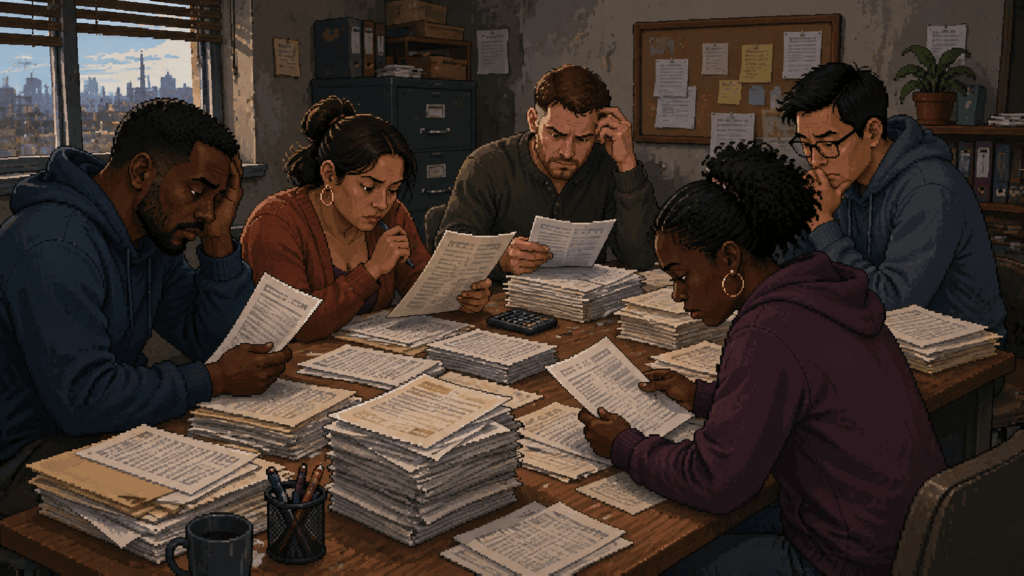
On paper, poverty is a number. The federal government draws a line and tells you that above it, you are fine, and below it, you are poor. That line has not kept up with what things actually cost in most of the country. A family can clear it by a few thousand dollars and still not be able to cover rent, food, and a car repair in the same month without something breaking.
The number matters because it decides who qualifies for help and who does not. It does not matter for much else. It cannot tell you who is skipping meals so their kid eats first. It cannot tell you who is driving on a tire that should have been replaced two months ago. Numbers are clean. Poverty is not.
What It Actually Looks Like
Poverty looks like a grown man in a work uniform, sitting in his car in a parking lot, doing math in his head before he goes inside to buy groceries. He is not homeless. He is not unemployed. He works. He still cannot make the numbers add up some weeks, and he has gotten good at not letting that show on his face when he clocks in.
It looks like a woman working two jobs who has memorized which fast food value menu items are the cheapest per calorie, not because she wants to, but because her kids need to eat and the math has to work every single day. It looks like a kid who says he already ate so his little sister can have the bigger portion. It looks like someone paying a bill three days late on purpose because that is when the check clears, and hoping the late fee is smaller than the alternative.
None of that looks like the commercial. It looks like your coworker, your neighbor, the person ahead of you in line who is quietly putting something back after checking their balance on their phone. Poverty in this country mostly wears normal clothes and shows up on time. That is exactly why it is so easy to miss.
It also looks like the older man who keeps working long past the age most people retire, not because he loves the job, but because stopping means losing the insurance that keeps his medication affordable. It looks like a young couple sharing one car between two jobs, timing their whole week around whoever’s shift starts first. These are not edge cases or unlucky exceptions. They are the ordinary, unremarkable shape poverty takes across millions of households that never show up in a single statistic anyone quotes at you.
The Choices Poverty Makes for You
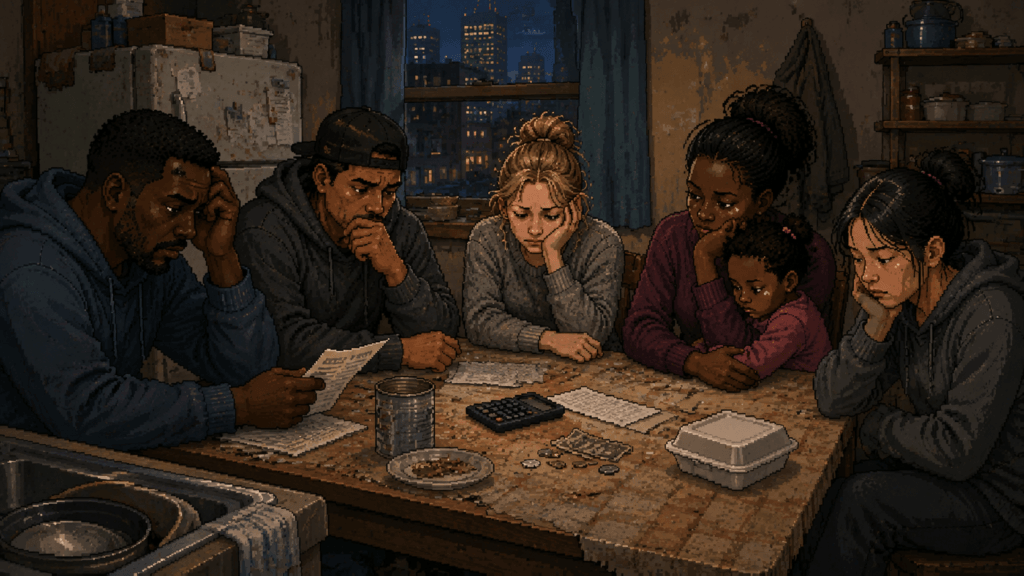
The hardest part of poverty is not the lack of money. It is the lack of choice. When you have enough, a flat tire is an inconvenience. When you do not, a flat tire can cost you your job, because you cannot get to work, and then it can cost you your apartment, because you cannot pay rent, and one bad week turns into a collapse that took years to build back from.
People love to say that poor decisions cause poverty. Sometimes that is true. Far more often, poverty causes the decisions that get called poor. Buying the cheaper shoes that fall apart in three months instead of the sturdy pair that costs more up front is not bad math. It is the only math available when three months of stretched budget beats one month of no shoes at all.
I have made calls like that myself, choices that looked short sighted from the outside and made complete sense from the inside, because the alternative was not survivable that week. Anyone who has never had to choose between two bad options has no real standing to judge the person who chose the less bad one.
Why Looking Away Is Easier
It is easier to look away from poverty than to look at it honestly. Looking away lets you keep believing the system mostly works and the exceptions are just unlucky or lazy. Looking straight at it means admitting that a lot of hardworking, disciplined, capable people are still one emergency away from losing everything, and that no amount of personal effort fully protects against that.
That is an uncomfortable thing to sit with, especially if you have built a life you are proud of and want to believe your effort alone explains it. Effort matters. It is not the whole story, and pretending it is lets everyone off the hook, the systems that set the conditions and the individuals who benefit from not questioning them too closely.
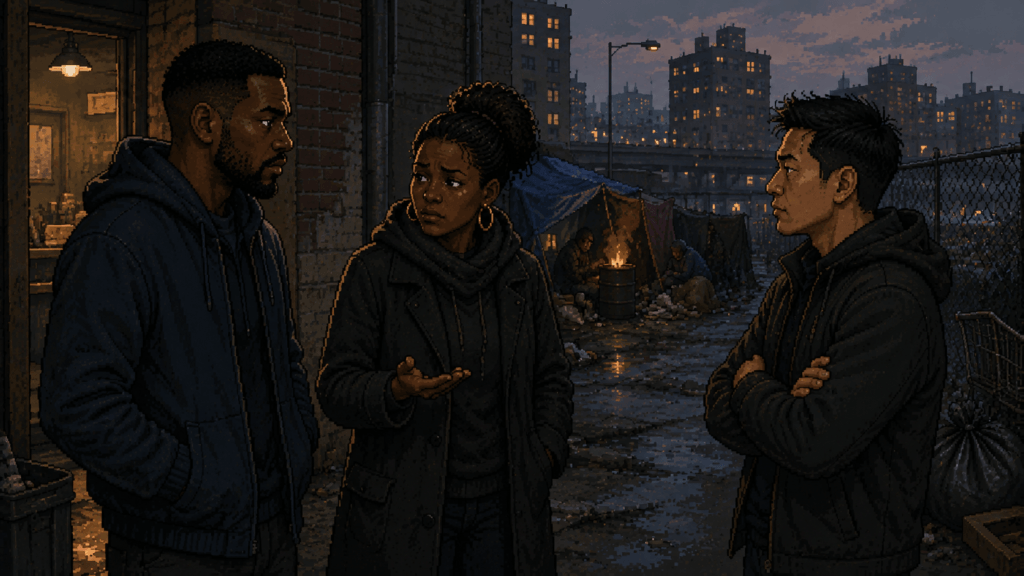
Looking away also protects you from feeling like you should do something. A stranger’s hardship on your television screen asks nothing of you beyond a moment of sympathy. A coworker’s hardship, once you actually see it, asks something real. It asks you to notice, to treat them with the dignity the moment deserves, and maybe to use whatever position you have to make their situation a little less impossible.
What Choosing to See Costs You
Choosing to see poverty clearly costs you the comfort of easy explanations. You lose the ability to say someone just needs to work harder without also asking what working harder has already gotten them. You lose the option of judging quietly from a distance, because once you see the real math, judgment stops making sense.
What you gain is a more honest picture of the world you are actually building in. I run several businesses and a nonprofit at the same time, and I do that work with full knowledge that a lot of the people I am trying to reach are doing exactly what this piece describes right now, today, while reading this. That knowledge does not make the work easier. It makes it more precise, because I am not building for an imaginary struggling person. I am building for the real one.
Seeing poverty clearly also changes how you treat the people in front of you day to day. It changes how patient you are with a coworker who seems distracted, how you word a comment about someone’s car or their clothes, how quickly you assume laziness instead of exhaustion. None of that costs you anything real. It just requires you to stop defaulting to the easiest, least honest explanation for why someone’s life looks the way it does.
The filter for everything in this space has always been the same. Does this serve someone carrying real weight who is still choosing to build? Poverty is real weight, carried by people who get up anyway, who show up anyway, who keep choosing to build a life that works even when the conditions are stacked against them. Seeing that clearly is not charity. It is just the truth, finally looked at directly instead of through a commercial.
Ronnie Canty | The Canty Effect