
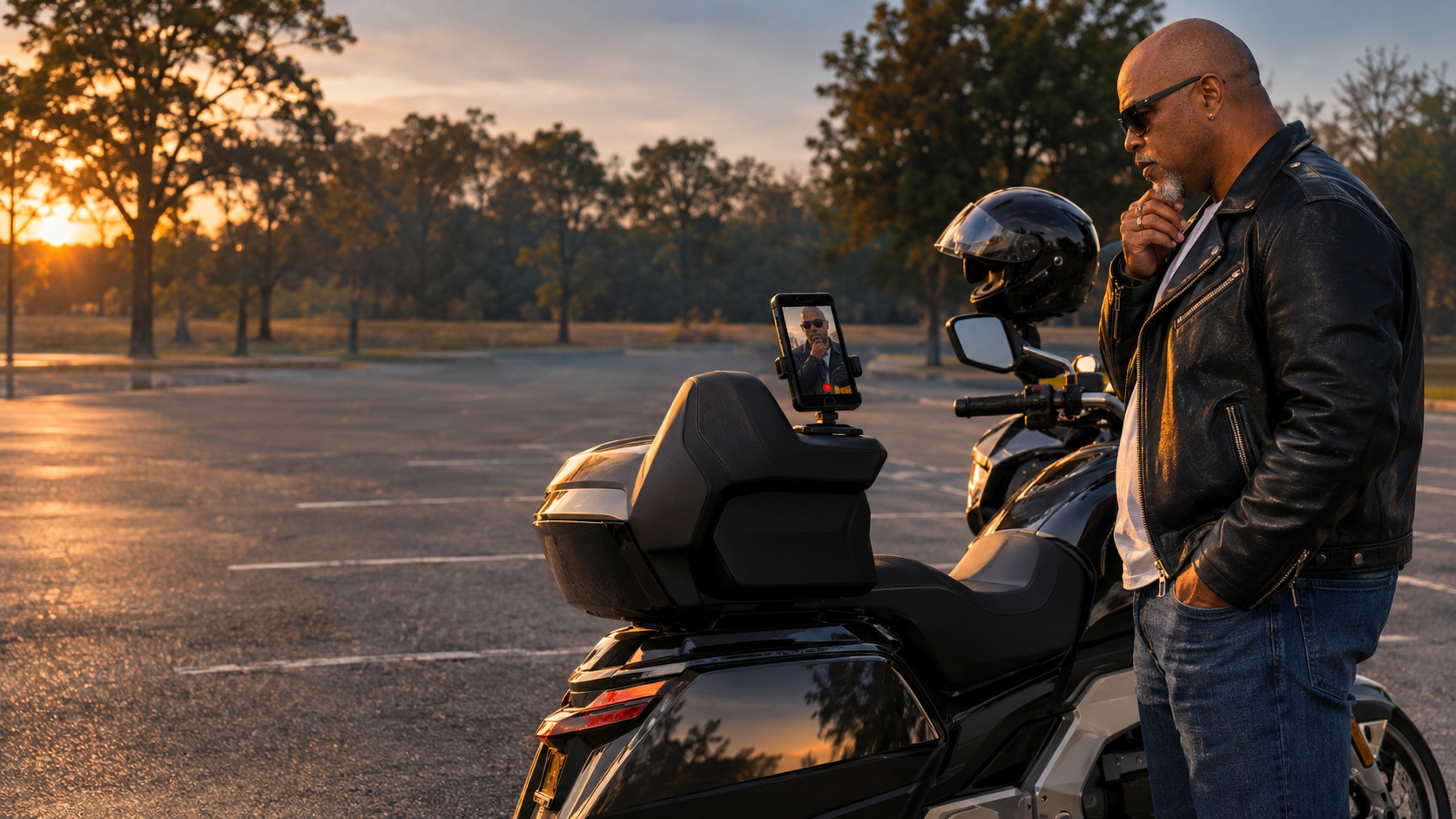
I pulled into a parking lot on my motorcycle, got my phone ready, and had exactly one line in my head. That was the whole plan. No notes, no talking points, and nothing past the first sentence. I figured the rest would show up the way it always did when I stood in front of a class. It didn’t show up the way I expected.
What I Tried
For this lesson, I wanted to see what happens when I talk to a camera with no script at all. I filmed three short videos during a motorcycle ride, stopping at a park and in a few parking lots along the way. Each video was about something I was honestly struggling with at the time: learning how to write a hook, that first line that makes someone stop scrolling. I had one opening line in mind for each video and nothing else. This whole channel is me growing an audience from zero in public, and getting seen means getting on camera whether I feel ready or not. My thinking going in was simple. I used to teach IT, presenting came easy back then, so how hard could talking to my phone be?
What Happened
Finishing felt great. There’s a real rush in getting through something you’ve been dreading, and I was excited that I’d actually done it. Then I watched the videos back. I stumbled over words, left gaps between sentences, and hesitated in spots where I should have just kept going. I’ll be honest about one more thing, too. I was disappointed with how I looked on camera, and leaving that out would make this sound cleaner than it felt.
There was one bright spot. My confidence grew from the first video to the third, and by the last one I was more settled and less stiff. But the stumbling didn’t get any better. I got more comfortable, and I didn’t get any clearer.
Those three videos went up anyway, one a day, stumbles and all. They’re the same videos I used for last week’s hook test, so if you caught one of them, now you know what was going on behind it. Each one passed 300 views within three days. I don’t know how many of those people noticed the stumbles, but the stumbles didn’t keep the videos from being seen.
What I Learned
The question I kept asking was why this felt so different from teaching. When I taught IT, I could stand in front of a room and explain things for hours. After thinking it through, I landed on three differences. The first is confidence. In a classroom I knew my role, and on camera I’m still working out what mine is. The second is the topic, because I was talking about hooks, something I’d just had to ask for help understanding.
That second one matters more than I first thought. In class, I taught things I knew inside and out, so my brain never had to search for the next idea. In these videos, I was explaining a skill while I was still learning it. Part of every pause was me thinking through the topic, not just the words. I can’t fake knowing something I don’t know yet, and it turns out the camera can tell.
The third difference surprised me the most. A classroom talks back, even when nobody says a word. You see nods, confused looks, and someone glancing at the clock, and you adjust without even thinking about it. A phone gives you none of that. It records whatever you do, and you don’t find out how it landed until much later, if you find out at all. When you’re building on your own, there’s nobody behind the camera to tell you to slow down, so for now the playback is the only feedback I get.
Here’s the part I keep coming back to. It would be easy to look at those stumbles and decide to wait until I’m better on camera before putting more out. The trouble is that I don’t know of any way to get better on camera except by being on camera. Waiting for the awkward phase to pass doesn’t make it pass. It just makes the wait longer. I’m not saying that because I’ve figured it out, but because I’m still standing in the middle of it.
What I’m Trying Next
I have three changes I want to try. First, I’m going to use a few bullet points instead of a single opening line, so I have a path to follow when my mind goes blank. Second, I’ll rehearse lightly. Not a script, just a quick run-through so the words aren’t brand new when the camera starts rolling. Third, I’m going to let myself try more than one take instead of treating the first attempt as my only shot. My guess is that notes might make me stiff in a new way, at least at first. I’m not sure yet.
To keep it honest, I’ll watch each new video back the same way I watched these. I’ll listen for the same three things: stumbles, gaps, and hesitation. If the new approach only makes me feel better without making me any clearer, that’s worth knowing too. I’ll share what I find, including if nothing changes.
So here’s my question for you. What’s one thing you’re waiting to feel ready for before anyone sees you try it? It could be a video, a class, a business, or a conversation you keep putting off.
R.L. Canty │ The Canty Effect, LLC