

I have waited on systems that were never built to move fast for someone who looks like me. Not once. Not twice. A lifetime of it, threaded through courtrooms, hiring processes, loan applications, and every institution that asked me to be patient while it figured out whether I mattered enough to act on. So when I hear someone say “justice takes time,” I do not hear wisdom. I hear a sentence handed down to people who were never asked if they agreed to serve it.
That phrase gets repeated so often that it has started to sound like comfort. It is not comfort. It is a stall dressed up in a robe. And this post exists to say plainly what most people already feel but talk themselves out of saying: delayed justice is not a slower version of justice. It is a different thing entirely, and pretending otherwise protects the people who benefit from the wait.
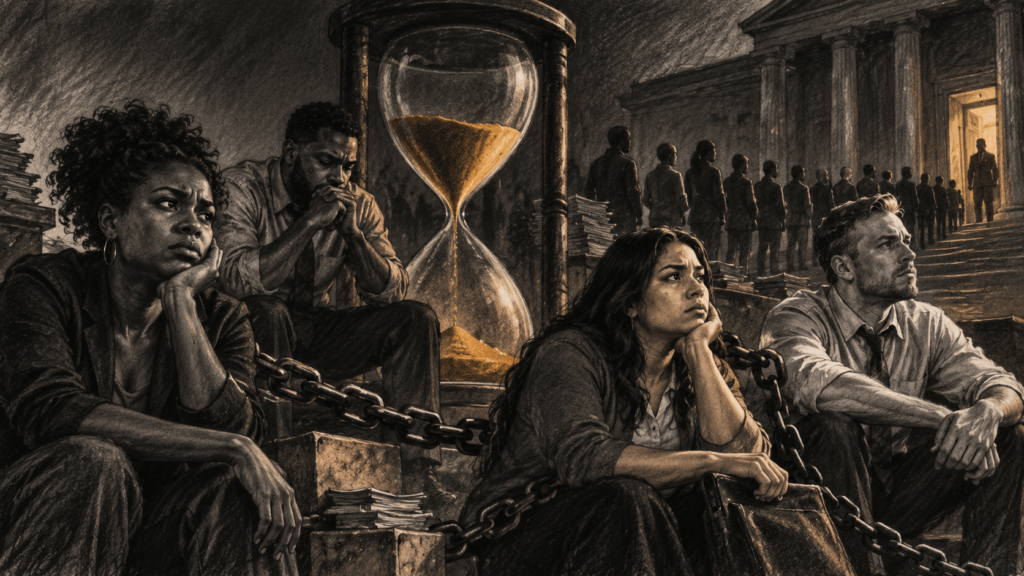
The Patience Trap
There is a specific kind of person who shows up whenever accountability moves too slowly for comfort. They are not the ones causing the delay. They are the ones defending it. They say the investigation needs more time. They say the court has a process. They say you cannot rush something this important, as if speed and seriousness cancel each other out. Most of them mean well. Few of them have ever had to live inside the space between when the harm happened and when anything was finally done about it.
That space is not empty. It is where rent goes unpaid because a settlement never arrived. It is where a family keeps showing up to a courtroom that keeps getting rescheduled. It is where someone waits two years for a disciplinary review board to decide whether the officer who hurt them broke a rule. The patience being asked for is not neutral. It is patience that costs the person waiting and protects the system doing the waiting to them.
What “In Due Time” Actually Costs
Here is the part that gets skipped over. Time is not a passive ingredient in justice. It is an active force that changes outcomes. Evidence degrades. Witnesses move, forget, or die. Public attention shifts to the next story before the first one resolves. The person who was harmed keeps living a life that has to function around an unresolved wound, while the person or institution responsible gets to keep functioning as if nothing is owed yet.
That is not a side effect of a careful process. In too many cases, it is the process working exactly as designed. A system that moves slowly enough gives itself room to let outrage cool, let media coverage fade, and let the person seeking accountability run out of energy, money, or both before anything actually changes. Calling that “due process” without naming what the delay accomplishes is how a stall gets rebranded as integrity.
I am not saying every delay is intentional. Some systems really are overloaded, underfunded, and doing their best with what they have. But intent does not change what the delay does to the person on the other end of it. A broken system and a strategic one can produce the exact same outcome: nothing happens, and the clock keeps the pressure off everyone except the person who was harmed.

Slow Is Not Neutral
We treat speed as if it is the enemy of fairness, but slowness has its own bias. It favors whoever can afford to wait. It favors institutions with budgets built for long timelines and legal teams paid to stretch them further. It does not favor the single parent who needed the resolution six months ago to make rent, or the young person whose case sat untouched long enough that the system aged out of even being required to help them.
This is where the filter question this whole platform runs on actually matters. Does this serve someone carrying real weight who is still choosing to build? A process that quietly punishes people for not being able to afford the wait fails that test every time, no matter how procedurally correct it looks on paper. Fair does not mean equal treatment of unequal situations. It means accounting for the fact that delay does not cost everyone the same amount.
Who Delay Protects
Ask yourself who actually benefits when accountability gets slow-walked. It is rarely the person who was harmed. It is almost always the party being investigated, sued, reviewed, or held to account. Every extra month is another month they get to operate, earn, and avoid the consequence that a faster process would have delivered sooner. The delay is not a loss for them. It is a form of relief, and every day of it is a day the harmed party does not get back.
This is the part the patience-preachers rarely sit with. When they defend the slowness of the process, they are, whether they realize it or not, defending the side that the slowness is helping. Neutral language like “letting the process play out” hides an outcome that is anything but neutral. If you would not accept that timeline while you were the one waiting for your rent, your case, or your child’s safety, you should not be comfortable asking someone else to accept it either.
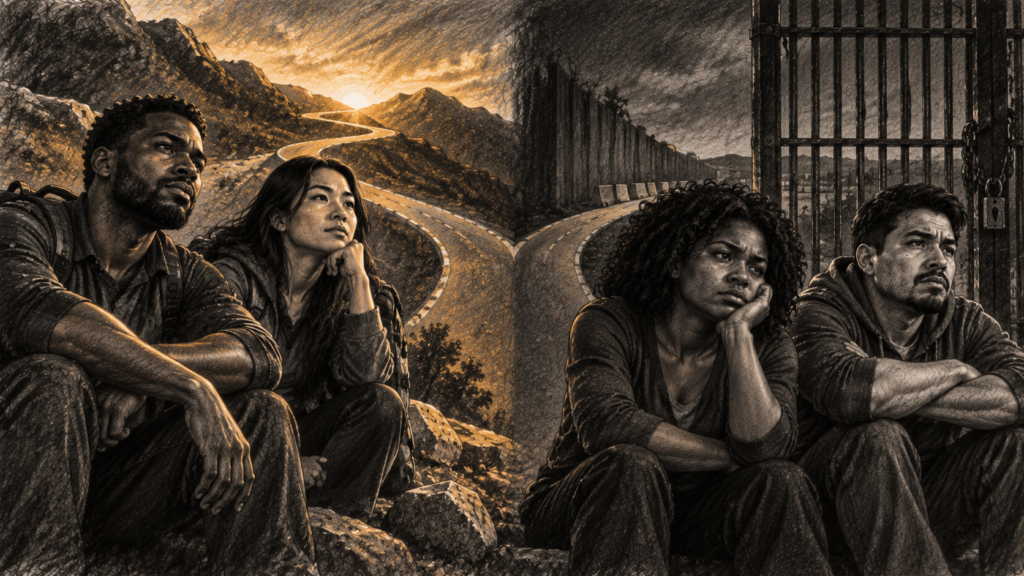
The Difference Between Patience and Permission
There is a real difference between patience and permission, and most people blur the two without noticing. Patience is choosing to wait because waiting genuinely serves a better outcome. Permission is agreeing to wait because objecting feels impolite, disruptive, or ungrateful. A lot of what gets called patience in these conversations is actually permission, quietly granted to systems that were never asked to earn it.
I am not arguing for chaos over process. Careful review has real value, and rushed accountability can produce its own injustices. What I am arguing against is the reflex to treat any timeline, no matter how long or convenient for the powerful, as automatically legitimate simply because it came wrapped in institutional language. A process is only as fair as the outcomes it produces for the people who have the least power to speed it up.
The Excuses That Keep Delay Alive
There are a handful of phrases that show up every single time this conversation happens, and they deserve to be named directly instead of nodded along with. “We have to be thorough” is one of them, and thoroughness is real, but thoroughness has never actually required the amount of time it gets credited for in practice. “We do not want to jump to conclusions” is another, usually deployed selectively, applied heavily when the person under scrutiny has power and applied barely at all when they do not. “This is bigger than one case” shows up too, turning an individual’s need for resolution into a footnote in someone else’s larger institutional caution.
Each of these phrases can be true in isolation. Thoroughness does matter. Conclusions should not be rushed carelessly. Precedent does carry weight beyond a single case. The problem is not that these phrases are false. The problem is how consistently they get reached for specifically when reaching for them benefits the party with more power in the room. Nobody tells a landlord to be thorough about evicting a tenant a few days late on rent. The thoroughness gets rationed out selectively, and once you notice that pattern, it is hard to unsee it.
I have sat in rooms, filled out forms, and made calls where I could feel exactly which kind of patience was being asked of me. There is patience that comes from genuine care about getting something right. There is a different patience that comes from someone hoping you will simply give up before they have to give you an answer. The two feel almost identical in the moment. They are not identical in outcome, and learning to tell them apart is one of the more useful things this platform can offer someone who is tired of not being able to name what is happening to them.

Where This Leaves Us
None of this means I have a five-step plan to fix five hundred years of broken systems. Nobody does, and anyone selling you one is selling something else. What I do have is a refusal to keep calling delay by a gentler name than it deserves. Justice that arrives late enough stops functioning as justice for the person who needed it on time. It becomes closure for everyone except them.
I am writing this from inside the same wait most of my readers know personally, not from somewhere above it. This is one person saying the quiet part out loud so that someone else carrying the same weight does not have to wonder if they are the only one who noticed. If you have ever been told to be patient by someone who was never the one paying for the patience, you already knew this before I wrote it down. You are not wrong for being tired of waiting. You are paying attention.
Ronnie Canty | The Canty Effect