The Politics of Historical Narrative
History likes to pretend it is neutral. Open a textbook, watch a documentary, or walk through a museum and you get the feeling that what you are seeing is simply what happened. The timeline looks clean. The characters are clear. The lessons seem obvious. It feels as if the past is just sitting there waiting to be reported like the weather.
But history is not just a record of events. It is a story about events.
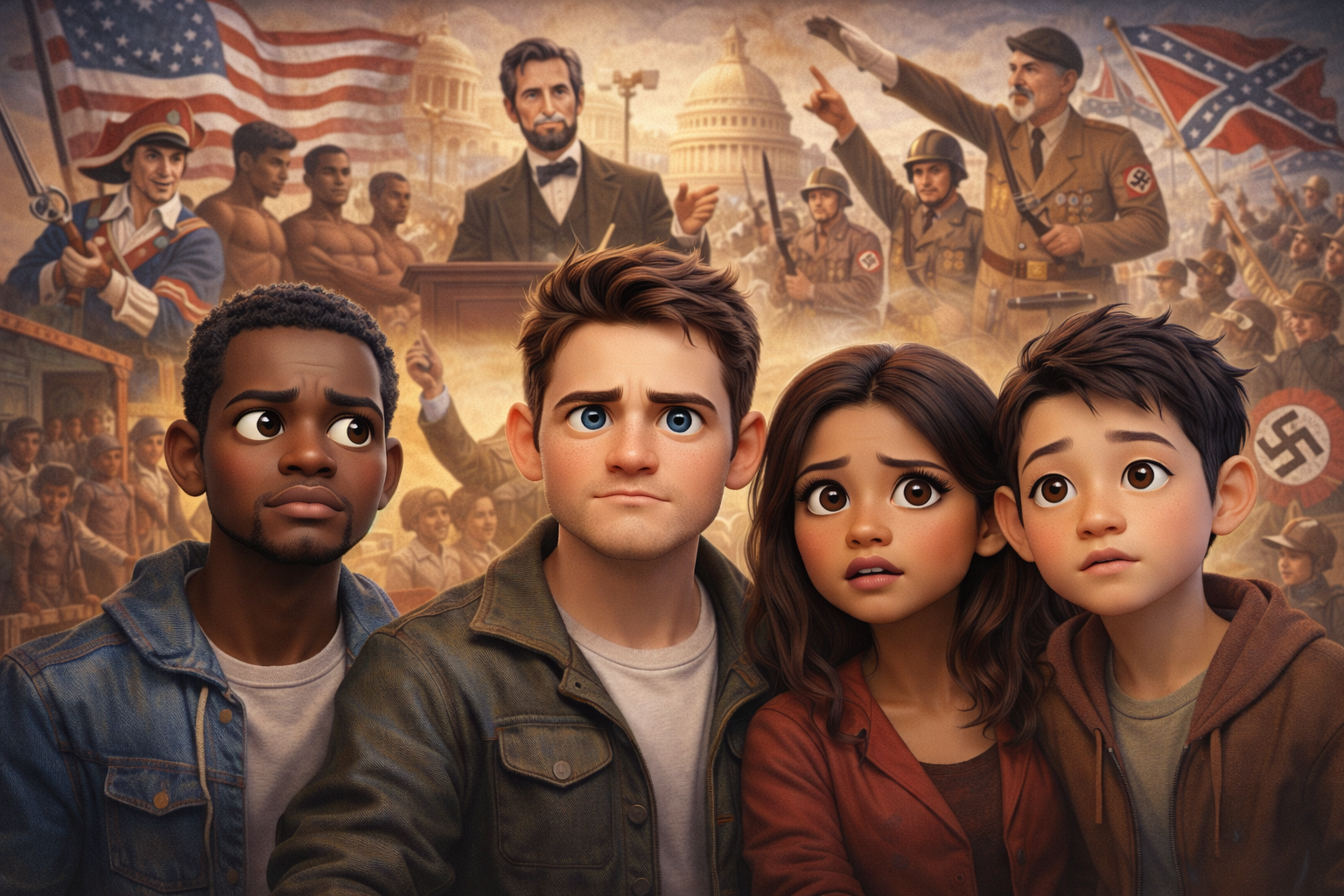
Someone always chooses which events matter, which people deserve attention, and which details get left out. Those choices may seem small at first, but over time they shape how entire societies understand themselves. The result is that history becomes less like a camera recording reality and more like a movie that has been carefully edited.
And editing always involves power.
History Is a Story With a Point of View
Many of us grew up believing that history is simply a collection of facts. We memorized dates, names, and major events. It felt like learning a giant list of information that could not be argued with. If the date of an event was correct, then the story must be correct too.
But facts alone do not create history. Someone has to decide which facts belong in the story and which ones stay hidden in dusty archives. Millions of things happen every year, yet only a tiny fraction end up in the official record. That means historians, governments, and institutions constantly make decisions about what deserves attention.
Those decisions shape the story that future generations inherit.
Think about it for a moment. If you remove certain voices from the narrative, the meaning of the story changes. If you highlight certain achievements while ignoring others, the lesson of history shifts. The past may not change, but the way it is explained absolutely can.
The Power Behind the Narrative
There is a famous saying that history is written by the winners. While the phrase sounds cynical, it captures something important about how narratives form. When a group gains power after a conflict, it often gains control over how that conflict will be remembered.
The winning side writes the textbooks. It builds the monuments. It funds the museums and decides which heroes deserve statues in public squares. Over time, that version of events becomes the accepted story that everyone grows up hearing.
Meanwhile, the losing side often has fewer opportunities to share its perspective. Its experiences may survive in personal letters, family stories, or small community records, but those voices rarely shape national memory.
That imbalance does not always come from a deliberate conspiracy. Sometimes it simply reflects who has access to publishing, education, and cultural influence. Yet the outcome remains the same. One version of history becomes dominant while others struggle to be heard.

The Quiet Disappearing Act
Bias in historical storytelling is not always loud or obvious. Sometimes it happens quietly through omission. Certain groups slowly disappear from the narrative, not because they were unimportant but because they were not seen as central to the story.
For many years, historical writing focused heavily on political leaders, military commanders, and powerful institutions. Kings, presidents, and generals filled the pages of textbooks. Their decisions were treated as the engines of history.
Meanwhile, the lives of everyday people received far less attention.
Workers who built industries, women who shaped communities, and minority groups who navigated systems of inequality were often treated as background characters. Their stories mattered deeply to the development of society, yet they were rarely presented as central to the historical narrative.
When those voices are missing, the past begins to look much simpler than it really was.
The Myth of Neutral Storytelling
Many institutions claim they present history exactly as it happened. The language sounds confident and objective. Museums speak about preserving the truth. Textbooks promise accurate accounts of major events.
Yet storytelling is never neutral.
Every narrative has structure. It has a beginning, a middle, and an end. It identifies causes and consequences. It highlights certain actors while placing others in supporting roles. Those choices influence how audiences interpret what they are hearing.
Consider how the same event can be described in different ways. A protest can be framed as citizens demanding justice or as chaos disrupting public order. Both descriptions might rely on similar facts, yet the meaning of the event changes depending on the storyteller.
That is the power of narrative framing.
The Schoolbook Problem
School textbooks face a difficult challenge. They must explain complex historical events to students who are encountering them for the first time. To make the material easier to understand, authors often simplify the story.
Simplification is useful, but it can also flatten the truth.
Historical figures are frequently presented as pure heroes or clear villains. Events that involved complicated motives and messy outcomes become tidy lessons about progress or failure. The rough edges of history are smoothed away so the story feels easier to follow.
Real life rarely works that way.
Many historical figures achieved remarkable things while also participating in harmful systems. Entire nations have made meaningful progress while also causing serious damage along the way. When textbooks remove those contradictions, students receive a version of history that feels cleaner than reality.
Later in life, encountering the full complexity can feel surprising or even uncomfortable.

National Stories and National Pride
Every country develops stories about itself. These narratives help people feel connected to a shared identity and a common past. They highlight moments of courage, resilience, and innovation that communities want to celebrate.
There is nothing inherently wrong with that impulse. Shared stories can create unity and inspire collective effort. The challenge arises when national pride becomes more important than historical accuracy.
Every society has moments that do not fit neatly into heroic narratives. Policies may have harmed certain populations. Leaders may have made decisions that looked wise at the time but produced painful consequences later.
When national storytelling avoids those uncomfortable chapters, the public receives a selective picture of the past. The country appears consistently noble and forward moving, even when reality was far more complicated.
Over time, that selective memory shapes how people interpret current events.
Why Expanding the Story Matters
When historians introduce new perspectives on familiar events, the reaction can be intense. Some people worry that expanding the narrative means rewriting history or attacking tradition. The debate can quickly become emotional because historical stories are tied closely to identity.
In many cases, however, the goal is not to replace the old narrative but to broaden it.
For example, historians today often examine how policies affected different groups within society. Instead of focusing only on government decisions, they ask how those decisions shaped daily life for ordinary people. They study letters, diaries, and community records that reveal experiences rarely included in official documents.
These perspectives do not erase the past. They add missing pieces to the puzzle.
When the story becomes more complete, it often becomes more complicated as well. Yet that complexity brings us closer to understanding how societies actually functioned.
The Archive Challenge
Another reason certain stories dominate history is access to records. Powerful institutions tend to produce large amounts of documentation. Governments preserve laws, speeches, and official correspondence. Military organizations record campaigns in great detail.
Ordinary people often leave far fewer written records behind.
A factory worker in the nineteenth century did not typically keep detailed journals. Enslaved individuals were often denied the ability to record their experiences openly. Many communities relied on oral traditions rather than written archives.
As a result, historians must work harder to recover those voices. They search through personal letters, examine artifacts, and listen carefully to family histories passed down through generations. Each discovery helps illuminate parts of the past that were previously overlooked.
The process takes time, but it gradually reshapes the broader narrative.

Media and the Modern Story
Today the struggle over storytelling extends far beyond academic history. News media, documentaries, films, and social platforms all influence how events are remembered. A powerful documentary can introduce millions of people to a perspective they had never considered.
Movies often shape the public imagination even more strongly than textbooks. Ask someone to picture ancient Rome or medieval Europe and they may recall scenes from popular films rather than scholarly research.
This does not mean entertainment is harmful. Storytelling has always been a way for humans to explore the past. The challenge is remembering that dramatic narratives sometimes prioritize emotion and spectacle over historical accuracy.
When audiences recognize that difference, they can enjoy the story while still asking thoughtful questions.
Why Historical Narratives Matter Today
The past cannot be changed, but the stories we tell about it influence the present in powerful ways. Historical narratives shape national identity, political debates, and public policy decisions. They influence what people believe about justice, responsibility, and possibility.
If a society believes it has always been fair and generous, it may struggle to recognize ongoing inequalities. If a nation sees itself primarily as a victim of history, it may overlook moments when it exercised power over others.
Understanding the full complexity of the past helps communities make wiser decisions in the present. It encourages humility and curiosity rather than blind confidence in familiar stories.
A More Honest Relationship With History
A healthier approach to history does not demand the destruction of traditional narratives. Instead, it encourages a willingness to question them and expand them. Multiple perspectives can exist at the same time without canceling each other out.
Heroes can have flaws while still making meaningful contributions. Progress can coexist with painful consequences. Societies can celebrate achievements while also acknowledging mistakes.
This broader view does not weaken a culture. In many ways, it strengthens it. A community that understands its past more clearly is better prepared to navigate the challenges ahead.

The Story Is Still Being Written
History is not frozen in place. New evidence continues to surface. New voices speak up. New questions lead researchers to revisit events that once seemed fully understood.
Each generation reexamines the stories it inherited and decides what deserves a closer look. Sometimes that process creates tension, especially when familiar narratives are challenged.
Yet the goal of studying history has never been comfort. The goal is understanding.
And the more honestly we examine the past, the more prepared we are to shape the future.
If this resonated, don’t stop here.
Clarity isn’t a one-time insight. It’s a practice.
Subscribe to The Canty Effect and get tools, reflections, and frameworks that help you see systems clearly, respond with agency, and stay grounded when things get complicated.
Start with our free guide, Seeing The System.
It’s a good place to sharpen your lens.
Get the guide. Stay curious. Choose not to look away.
Canty