Part 1: Introduction – Why Justice Refuses to Be Ignored
Scene One: The Street at Dusk
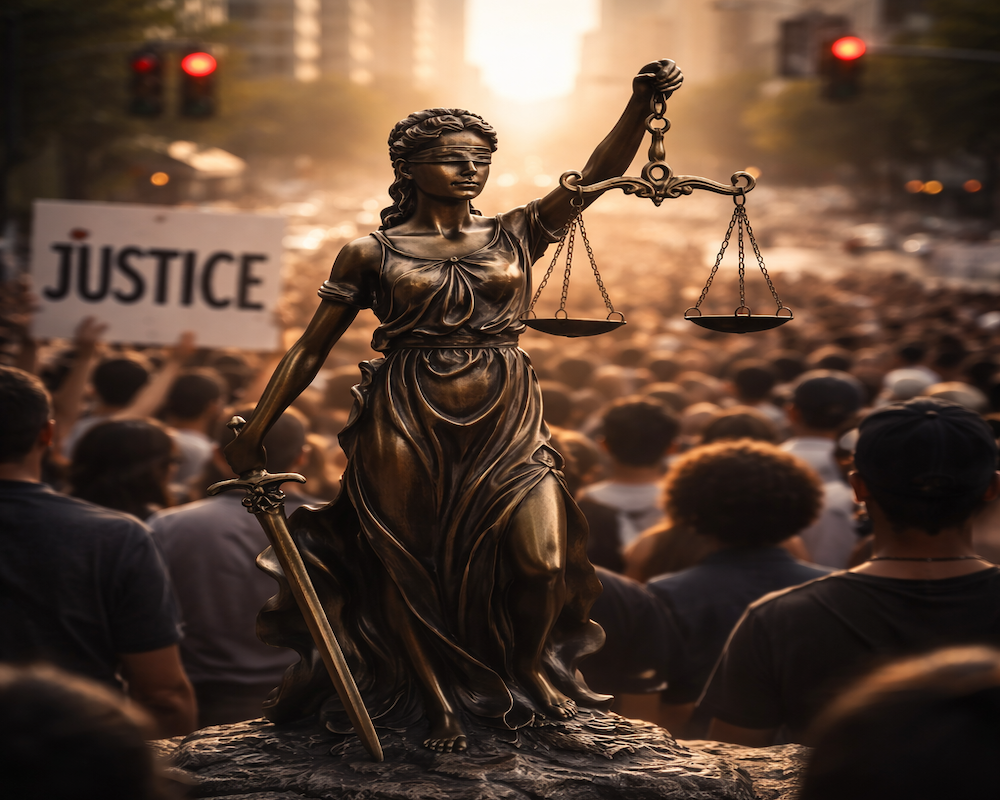
The air was heavy with chants and the smell of sweat on hot pavement. Cardboard signs leaned against legs, their words simple and sharp: Justice for George Floyd. A woman in a blue hoodie balanced her daughter on her hip, whispering the words of the chant so the little girl would join. A teenager livestreamed the crowd for his friends online. A man in a wheelchair raised a fist. The city around them kept buzzing with traffic, but here on this corner, time slowed. It wasn’t just anger that filled the crowd. It was grief, urgency, and the refusal to let another name fade.
This scene repeats itself in cities across the country. Sometimes the names change—Breonna Taylor, Michael Brown, Tamir Rice—but the rhythm is hauntingly familiar. A death, a spark, a crowd, a hashtag, a flood of arguments, and then a slow fade until the next tragedy. For people living inside the cycle, there is no fade. There is only the daily grind of navigating systems that never saw them as fully human. For everyone else, the choice is whether to look or to look away.
Scene Two: What We Mean by Justice
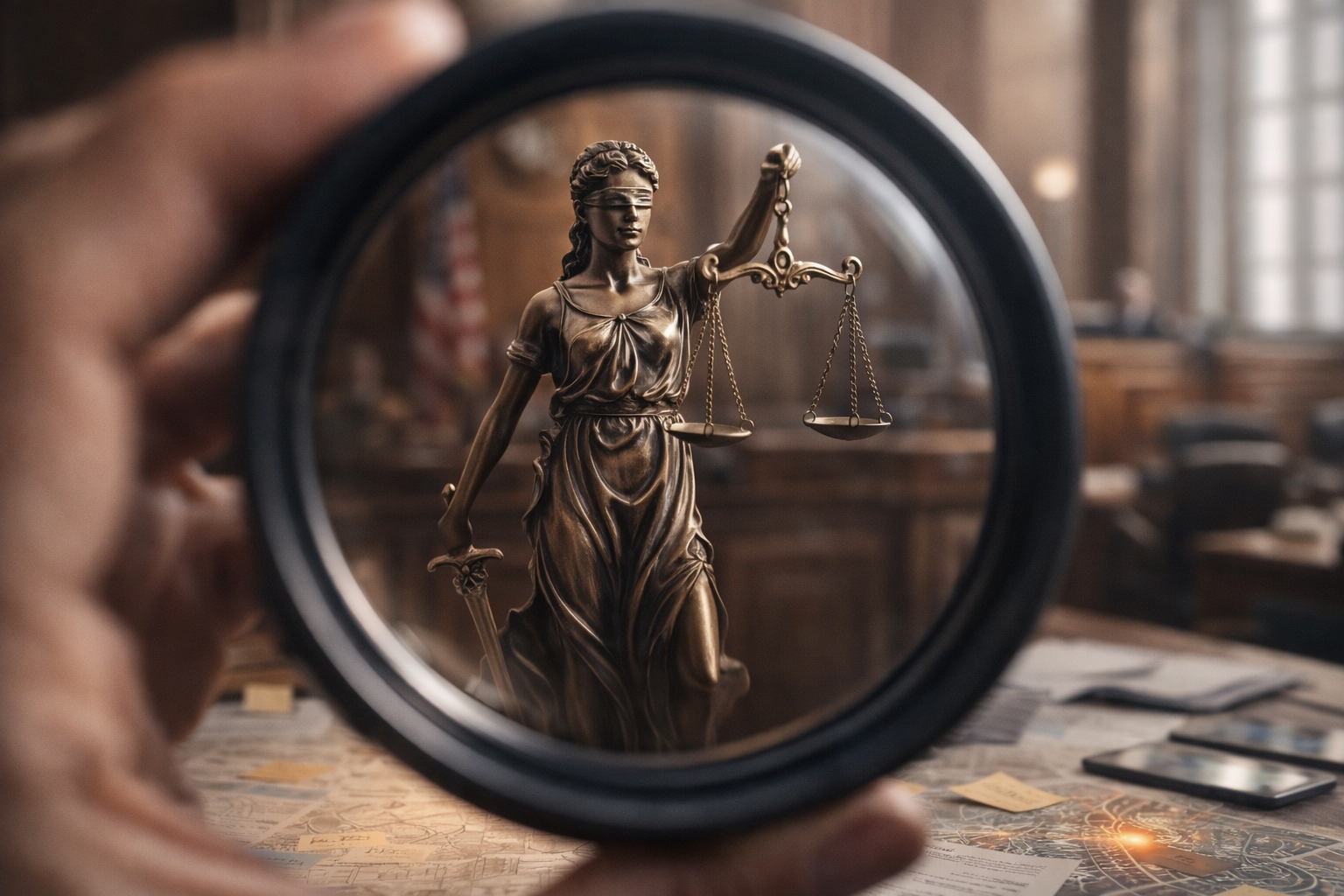
Justice is a word so overused that it risks sounding empty. Courtrooms hang it on walls in gold letters. Politicians roll it into speeches like garnish. But justice, when stripped of polish, is not a slogan. It is the raw idea that people deserve fairness and dignity, not because of wealth, color, or luck, but because they are human. Social justice takes that core and stretches it across society—housing, schools, jobs, healthcare, safety. It asks whether those foundations are strong or cracked.
When cracks line up along race, as they often do, the conversation becomes impossible to ignore. It’s no accident that movements for labor rights, gender equality, and climate change almost always overlap with racial justice. Race is the foundation stone. If it is crooked, every wall built on top leans with it. That’s why calls for racial justice hit with such force. They aren’t asking for scraps. They’re demanding the entire house be rebuilt so it doesn’t collapse on the next generation.
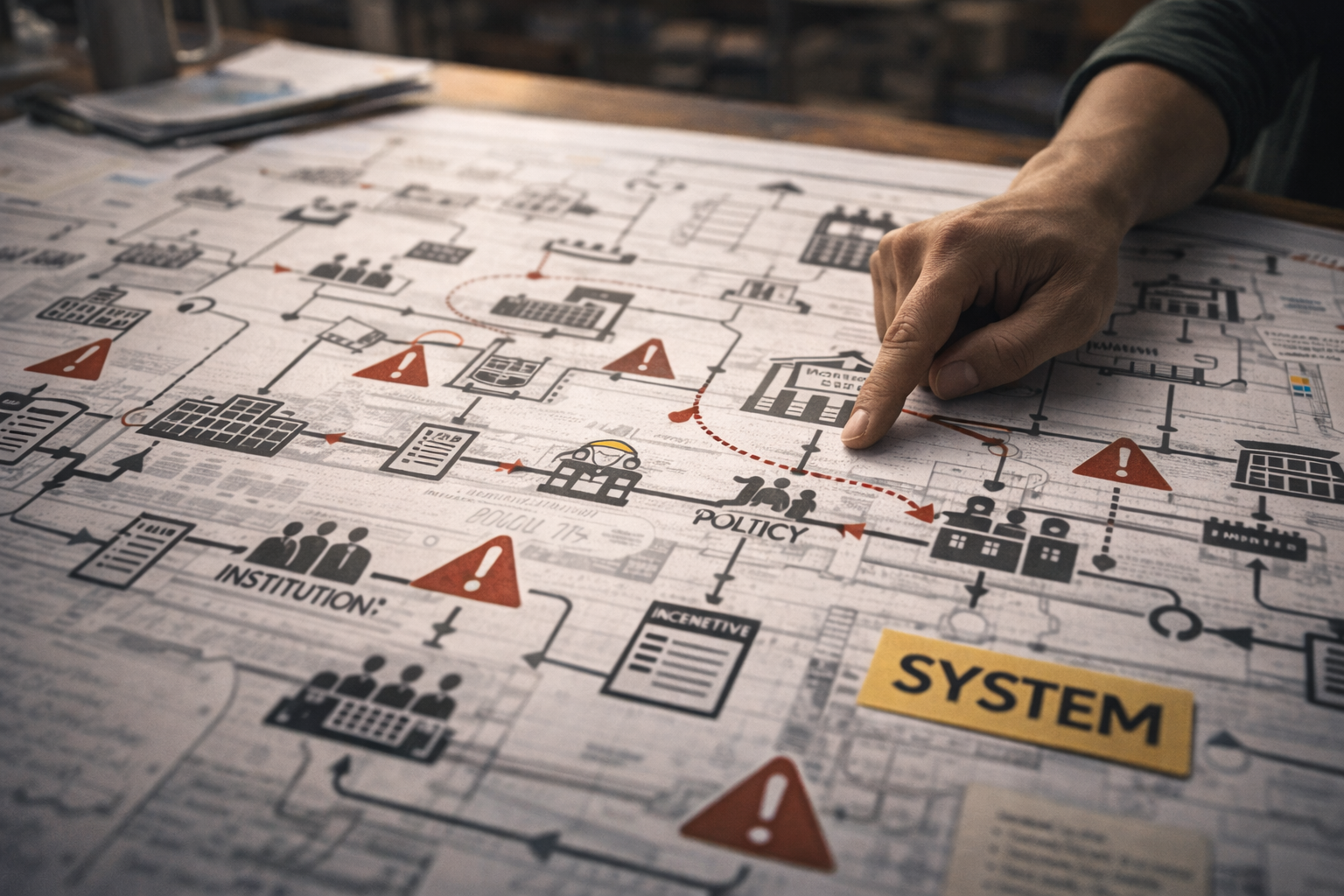
Scene Three: A System, Not a Slip-Up
A common argument pops up whenever systemic racism is named: “Things aren’t perfect, but isn’t it just a few bad apples?” The phrase has become a shield, a way to treat every act of discrimination or police violence as an isolated misfortune. But history laughs at that idea. You cannot look at redlining maps that banned Black families from neighborhoods, at school districts funded by property taxes in poor areas, at sentencing disparities in courtrooms, and still pretend this is about individuals.
Systemic racism is like gravity. You don’t always see it, but you feel its pull. It bends opportunities, wealth, and even lifespans. A white college graduate will likely earn more over a lifetime than a Black graduate with the same degree. Black mothers die in childbirth at higher rates than white mothers, even when incomes and education match. These are not slips. They are signals from a system built with bias baked into its bricks. To deny that is not optimism. It is blindness.
Scene Four: Police as the Flashpoint
The place where all this tension bursts into public view most violently is policing. Police reform has become the lightning rod, the shorthand for the whole struggle. The videos are too graphic to ignore: knees on necks, bullets through doors, children treated as threats. They shock people into marching because they reveal, in sharp minutes of footage, what communities of color have described for decades.
But policing is not a bubble. It is the sharp end of systemic racism’s spear. Poverty, housing, schools—all shape who encounters police most often. A teenager walking home in a wealthy suburb is “just a kid.” The same teenager in a disinvested neighborhood becomes “a suspect.” Reform debates get loud because they are about more than patrols. They are about what we want “safety” to mean: armored vehicles and tear gas, or stable housing, mental health care, and neighbors who know each other. Until that question is answered, protests will keep returning.
Scene Five: The Power of Voices
It’s easy to sneer at digital activism as performative. “Anyone can type a hashtag,” critics say, and they’re not wrong. But what they miss is scale. When Michael Brown was killed in Ferguson, Twitter turned a local crisis into a global conversation. When George Floyd’s last words were broadcast, they circled the globe before officials even finished their press conferences. Hashtags like #BlackLivesMatter and #SayHerName didn’t just trend; they forced names into public memory that institutions would rather forget.
The teenage girl filming, the lawyer live-tweeting, the mother writing an Instagram post after her son was stopped—all of them are part of a chorus that refuses silence. Do hashtags replace policy? No. But they pressure leaders, raise money for bail funds, amplify forgotten cases, and connect strangers across borders. Movements have always used the tools of their time. Once it was pamphlets, later newspapers, then radio. Today it is phones glowing in dark bedrooms, voices carried farther than any one protest march could reach.

Scene Six: Why This Series Matters
So why spend eleven parts diving into racial justice, systemic racism, and police reform? Because the story is too big for one sitting. Each piece—social justice as the broad vision, systemic racism as the hidden architecture, and police reform as the urgent flashpoint—deserves its own spotlight. Together, they form a picture of why the struggle continues, why it cannot be dismissed as “just politics,” and why it touches every corner of life.
This introduction is the opening door. The chapters ahead will not sugarcoat. They will tell stories of families locked out of homes, of students punished more harshly, of officers who chose violence when they should have chosen restraint. They will also tell stories of courage, resilience, and imagination—because justice is not only about naming what is broken. It is also about envisioning what could be built instead.
By the end, you may carry frustration, grief, or even skepticism. That’s fine. What matters most is that you carry the weight of why this fight refuses to fade, even when headlines do. Justice is not polite. It is persistent. And this series will follow that persistence, part by part, until the picture is too sharp to ignore.
If this resonated, don’t stop here.
Clarity isn’t a one-time insight. It’s a practice.
Subscribe to The Canty Effect and get tools, reflections, and frameworks that help you see systems clearly, respond with agency, and stay grounded when things get complicated.
Start with our free guide, Seeing The System.
It’s a good place to sharpen your lens.
Get the guide. Stay curious. Choose not to look away.
Canty